CNN is presenting a new documentary about online rapist networks as a shocking exposure. Yet two German journalists from the public broadcaster NDR have been reporting on this issue for years. Their work has already sparked criminal investigations and political debates, and it is important this background is acknowledged.
This article was originally published in German on May 7. You can read the German version here.
Whenever particularly bad cases of sexual violence come to light, there is widespread shock among the public and in the media. Jeffrey Epstein? “Shocking depths.” Dominique Pelicot? A “monster,” a “beast.”
Of course, this horror is appropriate and understandable. It is often accompanied by astonishment at just how bizarre and extraordinary such crimes are. Yet they are not extraordinary at all. Epstein and Pelicot are merely prominent examples of acts that unfortunately happen frequently.
That is just one reason why the investigative work of NDR journalists Isabell Beer and Isabel Ströh is so important. For the past four years, they have been investigating the topic for the programs “Strg_F” and “Panorama.” (Norddeutscher Rundfunk, or NDR for short, is a German public-service broadcaster that is part of the ARD.)
Beer’s and Ströh’s focus is on perpetrators who use Telegram and porn platforms to discuss how to drug and rape their partners. Male users share photos and videos, cheer each other on, and give guidance on what substances and doses to use, to render victims unconscious.
Videos of unconscious women are circulating on the “Motherless” platform as so-called “sleep content” and are racking up millions of views. Ströh and Beer were the first to report on this and have published several films on the topic. One of the Telegram groups that the NDR journalists were able to infiltrate had more than 70,000 members.
70,000 members. And that’s just one of many groups. So it’s possible that you, dear reader, know someone who is a member of such a network, or who has already seen such videos, maybe even watches them regularly. And apparently thinks it’s okay.
“You saved my life”
The investigative work by Beer and Ströh has led to criminal investigations, arrests, and court proceedings. German ministers of the interior and justice responded by passing two resolutions to criminalize the possession of recordings of the rape of adults, similar to the laws regarding child abuse material. One of the victims, whose husband had been secretly raping her for years and sharing visuals online, tells the interviewer in one of the films: “You saved my life.” It was only after the journalists’ inquiry that the police took action.
Isabel Ströh and Isabell Beer at the Grimme Award 2025Foto:
IMAGO / BREUEL-BILD
It is clear that their investigation had a huge impact and concrete significance for many victims, and is partly the reason Beer and Ströh were awarded the Grimme Prize in 2025 for “outstanding journalistic achievement.” (Disclosure: I was on that prize-giving committee). “Medium Magazin” also honoured the two as “Journalists of the Year” 2025.
This makes it all the more surprising that a recently released CNN documentary leaves all of this out. While it does address rape groups on Telegram, the content on the “Motherless” platform, and the victims of these crimes, the film makes no mention of the actual scale of the problem, which has already been revealed by the NDR investigation. Nor does it mention the political debate or the ongoing investigations and court proceedings. Only in the text that appeared with the documentary is there a single note that German investigative journalists Isabell Beer and Isabel Ströh were the first to report on the “Sleep” community on “Motherless.”
Not an exclusive topic
The point here isn’t whether CNN stole the idea from NDR; NDR doesn’t have a monopoly on this topic. On the contrary, especially when it comes to an issue where many women in many countries are potentially at risk, the more media outlets that report on it, the better. Everyone should know about these crimes and their scale, including the CNN audience. But the CNN investigation fails because it withholds from its audience much of what others have already uncovered. Anyone who only watches the CNN report gets the impression that all of this was new and previously unknown.
The CNN investigation focuses on the experiences of three women – two from England and one from Italy – who were unknowingly abused by their partners over years. The reporting team infiltrates an international Telegram group with over 1,000 members and tracks down a perpetrator in Poland. It is, of course, shocking.
And, of course, this investigation is getting a lot of attention. A CNN journalistPerson, die Informationen recherchiert, prüft und anschließend der Öffentlichkeit zur Verfügung stellt,... involved in the story says in an interview that finding a Telegram group with more than 1,000 members was eye-opening for her and her team. It showed them just how extensive this online abuse is, she said.
This statement is surprising because the journalist was already aware of the investigation conducted by her colleagues at NDR. As mentioned, that NDR investigation focused on significantly larger Telegram groups, as well as how authorities and platforms are handling this issue. In late 2025, CNN even reported on a court case against a man in the German city Aachen, which had been triggered by the research conducted by the NDR journalists.
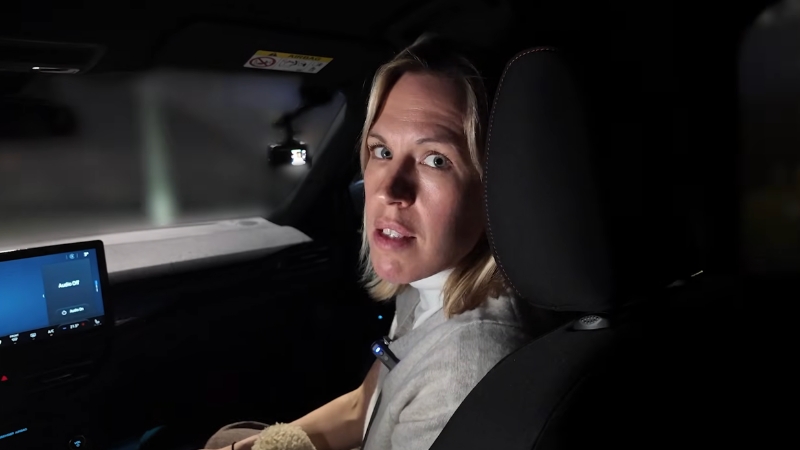
Shooting day with CNN in Hamburg
The CNN team had reached out to Ströh and Beer for their documentary. According to information from Übermedien, the two shared the results of their research and even gave CNN a detailed interviewJournalistisches Gespräch, bei dem eine oder mehrere Personen befragt werden. Politiker werden.... In November, they spent a day filming with the CNN team in Hamburg. But the footage did not make it into the film.
We asked CNN why the findings of the NDR investigation were not included in the report. We wanted to know if they didn’t consider the extent of this abuse to be relevant to their audience.
A spokesperson for the broadcaster gave a rather evasive response: CNN’s priority in publishing this story “was to expose this abuse and give a voice to survivors“. He added that they “greatly admire and appreciate the work of our colleagues at NDR and have prominently credited their journalism in our reporting and in subsequent interviews on other platforms.“
The spokesperson sends numerous links as evidence; one is to an interview in the U.S. magazine “The Meteor,” in which one of the CNN journalists praises the “amazing work” of the “German journalists” Beer and Ströh on the “Motherless platform”. The interview is titled “The Women Who Exposed the ‘Rape Academy’” – but that refers to the CNN journalists, not Beer and Ströh.
“Shocking revelation”
CNN is promoting its documentary as a major scoop. In their text they write that “months of research” uncovered a “hidden online world.” The “Meteor” and other media outlets are partially adopting this narrative. “Shocking revelation: Reporter infiltrates secret Telegram group where men plan rapes,” reported German broadcaster RTL, for example.
In its response to Übermedien, CNN writes that it has been reporting on this wider issue since the case of Gisele Pelicot and the “Coco” website first emerged – through which Pelicot had recruited other men to abuse his wife. CNN: “Other journalists and activists, in Canada and Serbia, have previously published work on this issue – and now other journalists are doing so in France. We are hopeful that others also continue to report on this issue.”
CNN emphasizes that it made it clear to the NDR colleagues before publication that they would not have space to include their interview, as they wanted to prioritize survivors’ testimonies.
Isabell Beer and Isabel Ströh don’t hold this decision against CNN at all. They are well aware from their daily work that entire interviews or days of shooting can be cut from a film. In response to a query from Übermedien, the two also emphasized how important it is to them that other media outlets report on the rapist network, and that the women affected are heard.
Increase Public Awareness
They themselves are in constant contact with other journalists, they say. For example, they were able to use parts of an interview that a Canadian journalist conducted with a victim. They had also come across the victim during their research in the Telegram chats. “This kind of collaboration makes it possible to reach as wide an audience as possible.”
Ströh and Beer say that CNN brought international attention to the issue with its English-language coverage. In their view, however, important aspects are missing from CNN’s reporting. The film does not reflect the fact that developments surrounding this network of rapists have been underway for some time, that they have been continuously asking investigative authorities about it since 2023, and later also politicians.
Isabell Beer and Isabel Ströh write:
“In our view, these developments are also of great significance on an international level. In conversations with victims and in letters from viewers, a central question is whether and how policymakers and law enforcement are taking action against this network of rapists. We are convinced that this information is certainly important to victims and should not be omitted.”
The CNN team has apparently decided to leave this context out. This makes their own investigation into the “hidden online world” seem more significant and exclusive than it actually is. But this risks producing the usual reaction: Oh, not again—more horrific acts that nobody knew about until now!
Further investigation would at least offer the opportunity to confront law enforcement agencies and politicians with an obvious question: What concrete steps have they actually taken to end this long-standing problem?
Update, May 11: The platform Motherless is currently offline. In a statement published on the website on May 9, it says that the site was voluntarily taken offline in order to identify and remove violating content. CNN reports that the website has been taken down by Dutch authorities after their investigation. Back in 2025, after investigations by NDR, the platform had already responded by, for example, blocking search terms such as “drugged” and deleting some videos.
Sie sehen gerade einen Platzhalterinhalt von Turnstile. Um auf den eigentlichen Inhalt zuzugreifen, klicken Sie auf die Schaltfläche unten. Bitte beachten Sie, dass dabei Daten an Drittanbieter weitergegeben werden.
Sie sehen gerade einen Platzhalterinhalt von Facebook. Um auf den eigentlichen Inhalt zuzugreifen, klicken Sie auf die Schaltfläche unten. Bitte beachten Sie, dass dabei Daten an Drittanbieter weitergegeben werden.
Sie sehen gerade einen Platzhalterinhalt von Instagram. Um auf den eigentlichen Inhalt zuzugreifen, klicken Sie auf die Schaltfläche unten. Bitte beachten Sie, dass dabei Daten an Drittanbieter weitergegeben werden.
Sie sehen gerade einen Platzhalterinhalt von X. Um auf den eigentlichen Inhalt zuzugreifen, klicken Sie auf die Schaltfläche unten. Bitte beachten Sie, dass dabei Daten an Drittanbieter weitergegeben werden.


No comment?
Um kommentieren zu können, müssen Sie Übonnent sein.